
The 2026 Marketing Playbook for Small Colleges

With enrollment declines stabilizing—but not rebounding—the smartest institutions aren’t spending more; they’re spending better. The leaders will be those schools that align message, media, and metrics around what actually drives enrollment. We may have passed the post-pandemic enrollment cliff, but the environment is still brutal: high school graduates are leveling off, tuition anxiety is rising, and colleges are expected to deliver sophisticated digital experiences. For small colleges, the challenges are differentiation, authenticity, and conversion.
2026 isn’t the year to try everything. It’s the year to double down on proven programs while testing a select few new tactics that could grow over time.
How to Use This Guide
Every college has its own unique goals, challenges, budgets, and strengths. This guide is broken down into four levels:
- Enrollment Marketing 101: the fundamentals any college must master first.
- Enrollment Marketing 201: next-level marketing for smart colleges ready to grow.
- Graduate Level Work: advanced programs and emerging opportunities.
- Quick Wins: simple tactics you can implement today.
- Bad Bets: things you should almost definitely stop doing.
You may identify with a specific level or find opportunities within each level.

Enrollment Marketing 101
These are the foundational marketing programs that most colleges have already mastered and matured. If your college has gaps here, it’s best to resolve them before proceeding to more advanced programs.
Differentiated Brand Position
In a crowded higher-ed market, sameness kills conversion. Most colleges still promise “small classes,” “personal attention,” and “transformative learning”—messages that could belong to anyone. A differentiated brand position defines why your college exists, who it serves best, and what outcomes make it distinct. Clear positioning builds trust, simplifies messaging, and creates the emotional clarity prospects need to choose you. When done well, it aligns enrollment, advancement, and academics under one consistent promise.
- Audit your current brand language for clichés using a word frequency tool—if everyone’s saying it, drop it.
- Interview admitted and lost students to uncover decision drivers and deal-breakers.
- Develop a short “Brand Positioning Statement” that defines your unique promise and proof points.
- Anchor your creative messaging in quantifiable outcomes—career placement, affordability, or access.
- Ensure all marketing teams, counselors, and leadership use the same three key brand pillars in every presentation and campaign.
Websites That Convert: Your Enrollment Engine
Your college website is no longer just a digital brochure—it’s the most powerful recruitment tool you have. A conversion-focused site leads prospective students from curiosity to commitment by presenting a clear path through inquiry, application, and enrollment. Mobile responsiveness, intuitive navigation, and fast load times are non-negotiables, as 76% of U.S. adults now make purchasing decisions via smartphone. Strategic CTAs on every page guide users deeper into your funnel. Colleges that regularly test landing pages and improve user flows often see significant gains in inquiry volume.
- Audit your top five program pages for load time, mobile usability, and CTA clarity.
- Use heatmaps and session recordings to diagnose funnel leaks, track drop-off points and user behavior.
- Run A/B tests on headlines or inquiry buttons quarterly.
- Add structured data for programs, costs, and outcomes.
- Ensure WCAG accessibility compliance is baked into design, not added later.
Mature SEO
Search Engine Optimization (SEO) remains one of the highest-return investments for small colleges. Prospects start their journey with program-specific searches—think “best online nursing degree” or “graphic design programs in Georgia.” By building content ecosystems around degree outcomes, faculty expertise, and career pathways, institutions can rank organically and reduce dependency on paid media. Technical SEO also drives long-term visibility, ensuring fast load times and structured data markup. Moz shows that brands investing in ongoing SEO optimization see up to 40% more qualified organic leads and lower acquisition costs compared to those relying solely on paid ads.
- Conduct a keyword gap analysis comparing your top programs to competitors.
- Create evergreen blog and video content answering “Is X degree worth it?” searches.
- Audit site speed with PageSpeed Insights and fix redirect chains or oversized media.
- Add schema markup for programs, tuition, and FAQs.
- Track organic conversions in Google Analytics 4 or HubSpot—not just pageviews.
Marketing Automation for Lead Nurturing
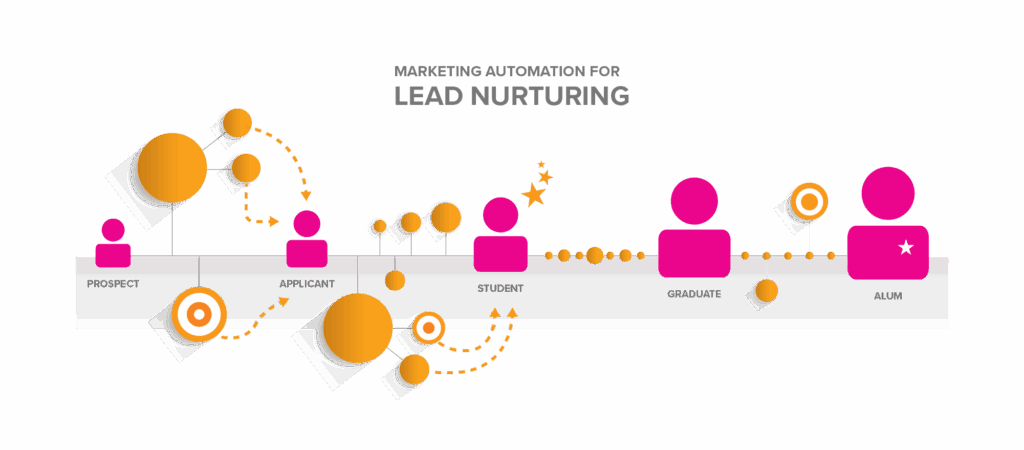
A student’s decision to enroll in your college follows months or years of touchpoints. Nurturing leads from inquiry to applicant is crucial to enrollment success. Colleges that follow up with prospects using laborious, manual outreach convert fewer leads. Period. Automation bridges the gap between first inquiry and final enrollment. Using behavioral triggers—like revisiting program pages or opening key emails—colleges can personalize nurture streams that guide students step-by-step through the funnel. Platforms such as HubSpot, Slate, or Salesforce Education Cloud allow segmentation by persona and intent level. The goal is humanized automation: timely, helpful messaging supported by real counselor follow-up. Schools effectively using automation report a 20–25% lift in inquiry-to-application conversions and major gains in counselor efficiency.
- Define nurture paths by stage (inquiry → applicant → admit → yield).
- Use progressive profiling forms to gather data over time.
- Automate reminders for incomplete applications with workflow tools.
- Segment lists by interest and engagement score.
- Blend storytelling and deadlines—automation doesn’t have to sound robotic.
Program-Centric Digital Campaigns
Generic “apply now” campaigns no longer convert. Program-level campaigns align media spend with student intent. A targeted search ad for “accelerated BSN program near me” or “MBA with data analytics concentration” reaches prospects already in decision mode. Tailored landing pages and ad creative emphasizing faculty, outcomes, or affordability outperform general brand messaging. Collegis Education reports conversion increases exceeding 30% after optimizing web and ad alignment.
- Fund search and social ads by program, not by department.
- Align landing page content with ad copy for message match.
- Use call tracking to measure ROI.
- Retarget ad viewers with program-specific ads and testimonials in Social Media and display ads.
- Review cost-per-inquiry and cost-per-enrollment metrics quarterly.
High-Engagement Social Media
Social media is a credibility engine as much as a content channel. Prospects use it to validate your culture and campus vibe. Encouraging user-generated content (UGC), hosting live Q&A sessions, and running small giveaways foster authentic connection. Embedding Instagram or TikTok content on program pages can raise time-on-site and conversions. According to Sprout Social, higher-ed brands encouraging student storytelling earn nearly double the engagement of promotional-only accounts.
- Recruit student ambassadors through student video platforms.
- Use social polls to crowdsource content ideas.
- Integrate social feeds into your homepage and program pages.
- Track engagement by post type (story, reel, carousel) using native analytics tools.
- Respond to DMs within 24 hours—speed equals trust.
Personalized Email Marketing
Email remains a workhorse for enrollment when executed with segmentation and clarity. Break lists down by audience (students, parents, counselors) and intent stage (inquiry, applied, admitted). Keep copy short and mobile-first—most families read on phones. Campaign Monitor reports that segmented email campaigns drive 760% more engagement and revenue than generic blasts. For small colleges, this translates into fewer unsubscribes, more replies, and stronger conversion rates.
- Create audience-based email tracks by persona and stage using email automation tools.
- Keep subject lines under 45 characters for mobile open rates.
- Use personalization tokens (first name, program interest).
- Include one clear CTA per message linked to optimized landing pages.
- Test send times and CTAs regularly.
Authentic Storytelling
Proof beats polish. Today’s students crave authenticity over advertising. Real stories—from alumni who’ve launched meaningful careers to students thriving on campus—build trust and emotional connection. Video testimonials, day-in-the-life takeovers, and career outcome features outperform high-production brand spots. A survey by EAB found that 64% of Gen Z prospects rank “authentic student stories” as the most persuasive content when researching colleges. Storytelling converts because it transforms abstract brand promises into personal proof of success.
- Collect three new student or alumni stories per semester using VocalVideo.
- Film authentic, unscripted testimonials—smartphone videos are fine.
- Publish one “student voice” blog monthly featuring outcomes.
- Repurpose stories across web, email, and paid campaigns.
- Showcase diversity—different backgrounds, pathways, and outcomes build inclusivity.
Enrollment Marketing 201
These are the programs that separate the organized from the optimized—the colleges that have mastered the basics and are now building sophistication, automation, and scale. Think smarter data, richer storytelling, and faster personalization. Each tactic here compounds what you’re already doing well and positions your institution to compete with larger, better-funded peers.
Search Everywhere Optimization
Search isn’t just about Google anymore. Students are discovering colleges through TikTok, YouTube, Reddit, and AI chatbots like ChatGPT or Perplexity, which increasingly serve as alternative search engines. Colleges that adapt their content—by optimizing for conversational queries, social search, and emerging AI assistants—will reach audiences where discovery is actually happening. Make your content machine-readable and context-rich so that when students ask “What’s the best nursing school near me?” or “Which colleges have strong esports programs?”, your institution shows up with credible answers.
- Audit your visibility across Google, TikTok, YouTube, and Reddit using Ahrefs or SEMrush.
- Write program and blog content in Q&A format to rank in featured snippets and AI-generated responses.
- Test conversational queries in AI tools (e.g., “best liberal arts college in New England”) and see if your school appears.
- Use schema markup and consistent FAQs to make your site AI-readable.
- Optimize captions, alt text, and descriptions in video content for social search visibility.
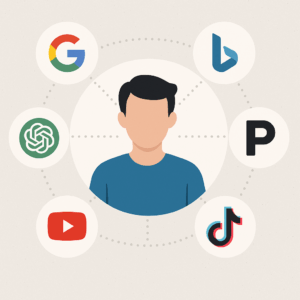
SEO has grown beyond search engines into chat agents and Social Media.
Short-Form Video: TikTok, Reels, and YouTube Shorts
Short-form video dominates how prospective students consume information. Quick, authentic clips can explain admissions steps, spotlight campus life, or answer questions in under 30 seconds. According to Pew Research, 63% of U.S. teens use TikTok daily, and YouTube remains the most-visited platform. Colleges that post consistent, useful, and personable content—not just polished promos—win attention and trust.
- Build a 60-day content calendar mixing student takeovers, faculty Q&As, and admissions myth-busting.
- Use CapCut or Canva templates to maintain quality with minimal effort.
- Start each video with a hook: a question, stat, or challenge.
- Add closed captions and searchable hashtags for accessibility and discovery.
- Cross-publish every video to YouTube Shorts for SEO benefit.
Social for Search
Social content now functions as a search layer. Gen Z students search TikTok and Instagram for advice on programs, scholarships, and campus life more often than they use Google. Your posts should be keyworded, captioned, and structured to appear in those searches. This requires consistent, descriptive copy—not just clever visuals.
- Use keyword phrases like “how to apply to [Your College]” or “student life at [Your Program].”
- Write alt text and detailed descriptions for every post.
- Create a recurring “How To Apply” or “Life at [Program]” series.
- Encourage students to tag your college when they post academic or dorm content.
- Monitor trending hashtags using social listening tools to inform your strategy.
AI Personalization
AI-driven personalization tailors your website, email, and ad experiences based on student behavior and intent. Colleges that integrate AI into their CRMs can automatically serve relevant content—like tuition information for cost-focused visitors or program stories for career-focused ones. Used responsibly, personalization enhances engagement without sacrificing privacy or trust.
- Integrate data platforms that unify behavioral data across web, email, and CRM.
- Test AI-driven content blocks that change based on user profile or page history.
- Use predictive lead scoring to prioritize counselor outreach.
- Offer dynamic program recommendations similar to “students also viewed.”
- Be transparent: include clear opt-outs and data-use disclosures.
AI Chatbots for Admissions and Advising
AI chatbots have evolved from novelty to necessity. Students expect instant, 24/7 answers about applications, deadlines, and aid—especially those outside standard business hours. A well-trained chatbot integrated with your CRM can qualify leads, reduce counselor workload, and surface FAQs automatically while routing complex queries to humans. Modern bots powered by natural language models are conversational, empathetic, and constantly learning.
- Deploy a chatbot tool like Drift, Intercom, or Mainstay.
- Limit the bot’s scope: start with admissions FAQs, then expand to financial aid or advising.
- Set a clear human hand-off process for complex or emotional conversations.
- Analyze chat transcripts monthly to identify new content opportunities and inaccuracies.
- Brand your chatbot with a friendly name and tone that fits your institution.
Micro-Influencer Partnerships
Micro-influencers—students, alumni, or local creators with small but loyal followings—bring credibility that paid ads can’t. Their voices feel authentic because they are peers, not promoters. Partnering with creators who genuinely reflect your brand values can drive engagement, yield, and organic reach far beyond your institutional channels.
- Identify potential partners using influencer search platforms like Heepsy or SparkToro—or your own student ambassador network.
- Provide creative briefs, content guidelines, and disclosure requirements.
- Offer small stipends, merch, or experience-based rewards rather than large cash payments.
- Track campaign traffic using UTM parameters.
- Repost top-performing creator content on official channels with permission.
Yield Retargeting & Microjourneys
Yield season is make-or-break. Personalized retargeting and microjourneys help keep accepted students engaged and moving toward deposit. Dynamic ads and automated emails can show residence halls, financial aid reminders, or academic success stories based on individual behaviors. This strategy nurtures confidence and reduces summer melt.
- Segment admitted students by program or deposit status.
- Serve personalized display ads showcasing housing, orientation, or career outcomes.
- Use marketing workflows to automate microjourneys by behavior.
- Incorporate SMS nudges for time-sensitive deadlines.
- Measure conversion from “admitted” to “enrolled” to evaluate ROI.
Lifecycle Content Marketing
Lifecycle content keeps students engaged from their first inquiry through alumnihood. It connects marketing, admissions, and advancement under one storytelling arc. By mapping content to each stage—prospect, applicant, student, graduate—you build consistency, loyalty, and advocacy. Schools that maintain active communication across the lifecycle enjoy stronger retention and alumni referrals.
- Build a content map that spans inquiry to alumni stories.
- Highlight internships, faculty achievements, and career outcomes regularly.
- Automate “student success” updates through your CRM or newsletter tools.
- Feature alumni mentors in admissions and social storytelling.
- Repurpose lifecycle stories into email drip sequences and social reels.
Community Partnerships
Local alliances are an enrollment multiplier. Partnering with employers, nonprofits, and community colleges builds trust and creates direct pipelines for adult learners and transfers. These partnerships also strengthen regional reputation, showing your institution as an active force in workforce development and civic life.
- Launch dual-enrollment or transfer pathway campaigns with local schools.
- Host joint career fairs or “Day on Campus” events with employer sponsors.
- Create co-branded success stories highlighting shared outcomes.
- Collaborate with local Chambers of Commerce for visibility.
- Include community leaders in advisory or mentorship roles for programs.
Reputation Management
In 2026, reputation is a live metric, not a quarterly report. Reviews, Reddit threads, and local media shape perception daily. Proactive monitoring and rapid response build trust and signal transparency. According to BrightLocal, 88% of consumers trust online reviews as much as personal recommendations. For colleges, a strong reputation directly impacts inquiries and yield.
- Claim and update profiles on Niche, Google, and major review sites.
- Use social monitoring tools to track brand mentions.
- Respond publicly to legitimate concerns with empathy and clarity.
- Feature positive reviews and testimonials in campaigns.
- Train a cross-department response team for crisis escalation.
Graduate Level Work
These are the experimental frontiers of enrollment marketing—the tactics for institutions that have mastered the fundamentals and built operational confidence. They demand more data discipline, creative vision, and cross-department collaboration than most schools are ready for—but when done well, they can redefine how prospects experience your brand.
Generative AI Content at Scale
Generative AI tools like ChatGPT, Jasper, and Copy.ai can streamline content production—creating program variations, dynamic landing pages, and personalized messages for each audience segment. The key is governance: use AI to accelerate creative iteration, not to replace authentic voice. With the right oversight, generative AI can expand capacity, consistency, and personalization while maintaining brand integrity.
- Use AI to generate program page variations targeted by audience (first-year, transfer, adult learner).
- Train models using a custom GPT that adheres to your brand style guide and voice to ensure consistency.
- Implement a human review workflow for all AI-generated content.
- Deploy AI content detectors to prevent over-automation.
- Experiment with chat-based academic advising pilots using Mainstay or Intercom.
Decentralized Brand Advocacy
Your most powerful storytellers are already on campus. Decentralized advocacy programs train and empower student and alumni creators to represent your brand within a defined framework. By equipping these ambassadors with content templates, messaging guardrails, and creative freedom, colleges can scale storytelling while maintaining control and authenticity.
- Recruit diverse student creators through marketing or admissions ambassador programs.
- Provide branded Canva and social scheduling templates.
- Host quarterly training on content best practices and brand tone.
- Develop a creator code of conduct covering disclosure and brand voice.
- Use UTM links to track influencer-driven traffic and conversions.

Student ambassadors can be extremely effective in telling your college’s authentic story.
AR/VR Campus Immersion
Immersive experiences let students explore campus anytime, anywhere. From VR campus tours to augmented reality program demos, immersive tech offers high-impact storytelling for online, graduate, and international audiences. Though development costs are higher, the engagement payoff can be significant—especially for visually rich or spatially impressive campuses.
- Create 360° campus tours using YouVisit.
- Develop AR experiences that highlight labs, studios, or dorms.
- Integrate VR modules into your admissions events or counselor visits.
- Embed immersive elements in program pages with virtual “tour now” calls to action.
- Track engagement rates and inquiry conversions from immersive experiences.
Predictive Enrollment Modeling
Predictive modeling uses machine learning and analytics to forecast enrollment outcomes, identify melt risk, and optimize marketing spend. Colleges with mature data infrastructure can leverage predictive models to make smarter budget allocations and personalize outreach. The challenge lies in data hygiene and interdisciplinary collaboration—marketing, admissions, and IT must work in sync.
- Audit CRM and application data for completeness and accuracy.
- Use platforms like Tableau or Power BI for visualization and pattern discovery.
- Develop melt prediction models with simple logistic regression before scaling to machine learning.
- Collaborate with institutional research or data science faculty for modeling expertise.
- Turn predictions into actions—shift spend, prioritize outreach, or adapt messaging.
Cross-Platform Storytelling
Today’s brand reach extends beyond traditional digital channels. Podcasts, streaming content, and multimedia storytelling allow colleges to connect with audiences through narrative and thought leadership. A well-produced series builds familiarity and authority, positioning your institution as a trusted voice in your field.
- Launch a program-branded podcast using Spotify for Podcasters or Buzzsprout.
- Interview alumni, faculty, and employers on career outcomes and innovation.
- Repurpose podcast highlights into short video clips for social media.
- Distribute streaming content through YouTube.
- Integrate storytelling across email, web, and paid channels to amplify reach.

Data-Driven Creative Testing
Even advanced creative needs constant experimentation. Data-driven creative testing uses automation and analytics to test headlines, visuals, and CTAs in real time—then reallocates spend toward what performs best. This “always-learning” mindset moves marketing from intuition to intelligence.
- Set up multivariate ad testing through Google Ads Experiments or Meta Business Manager.
- Develop a hypothesis-driven creative calendar with clear success metrics.
- Archive and tag creative assets by theme, channel, and result.
- Automate low-performing creative pauses using AI optimization tools.
- Share creative performance dashboards weekly with your full marketing team.
Ethical AI Governance
As AI becomes more embedded in marketing, colleges must balance innovation with responsibility. Establishing governance frameworks ensures that algorithms, automation, and data use align with institutional values and regulatory standards. Transparency and oversight build trust with both prospects and internal stakeholders.
- Form a cross-functional AI ethics committee with marketing, IT, and legal representation.
- Publish a short public statement on responsible AI use in marketing.
- Document data sources and model limitations for any predictive or generative use cases.
- Use AI governance tools to monitor compliance and bias.
- Train your marketing team annually on data privacy and algorithmic transparency.
Quick Wins
Want some cheap, easy DIY options you can try today? These are the fixes and experiments that boost inquiries and conversions fast—often without new budget or tools. Perfect for teams that need early traction or proof of impact before scaling larger campaigns.
Audit Website Conversions
Your website’s weakest link is usually hiding in plain sight. Slow load times, buried CTAs, or outdated program info quietly choke inquiry flow. A focused site audit can uncover dozens of easy fixes that immediately improve lead volume.
- Run a free site speed check using Google PageSpeed Insights or GTmetrix.
- Click through every program page to test inquiry form links and CTAs.
- Replace outdated stats or faculty photos within 24 hours of discovery.
- Prioritize mobile experience—most families browse your site on phones.
- Benchmark bounce rate and inquiry conversions before and after changes.

Free tools like Google PageSpeed provide insights into performance issues your site may have.
Refresh Inquiry Forms
Every extra field is a barrier. Simplifying inquiry forms to capture only the essentials (name, email, program interest) can dramatically lift completion rates. Adding progressive profiling later keeps your CRM clean and your leads flowing.
- Limit your form to three required fields on first touch.
- Use smart forms to collect more info over time.
- Test button copy like “Get Info” vs. “Request Details” to find the higher converter.
- Set form submission tracking in Google Analytics or HubSpot for real-time reporting.
- Offer instant confirmation with a helpful next step (download, event invite, counselor chat).
Launch a 30-Day Nurture Sequence
Don’t let cold leads die in your database. A short, story-driven email sequence can re-engage prospects and prompt applications. Focus on outcomes, student stories, and small calls to action that invite curiosity—not pressure.
- Plan four emails: student story → program value → cost/aid clarity → counselor invite.
- Use your CRM’s automation to trigger messages based on inactivity length.
- Include video or GIF snippets to increase click-through rates.
- Measure engagement weekly and remove unresponsive contacts after 30 days.
- Repurpose the highest-performing email as a paid retargeting ad.
Run a $1,000 Micro-Campaign
Sometimes the smartest test is a small one. A micro-campaign across two paid channels (like Meta and Google) reveals what messaging resonates—without draining your budget. The goal is learning, not scale.
- Split your $1,000 evenly between two platforms.
- Target one specific program or audience segment.
- Use Google Ads and Meta Ads Manager to track cost per inquiry (CPI) and cost per application (CPA).
- Test at least two creative angles—outcome vs. experience—and see which wins.
- Share results in a one-slide “learning report” for leadership visibility.
Train Counselors
Your marketing can only perform as well as your follow-up. Training admissions counselors to mirror marketing tone, cadence, and timing ensures every prospect conversation feels seamless. Consistency builds confidence—and conversion.
- Host a 1-hour joint session with marketing and admissions every semester.
- Share the latest email templates, tone guides, and talking points.
- Use personality insight tools to tailor counselor communication styles.
- Align call and email timing with marketing automation signals.
- Track response speed and personalization rate as performance metrics.
An annual review of brand standards, assets and tools can help bring consistency to your college’s brand message.
Refresh Google Business and Review Profiles
Google is often a family’s first touchpoint, and outdated hours or old photos can undermine credibility fast. A quick update of your Google Business profile improves local visibility and reinforces trust.
- Claim and verify your profile via Google Business.
- Upload new photos and 360° campus shots quarterly.
- Respond to reviews within 48 hours—both positive and negative.
- Encourage admitted students to share authentic feedback post-decision.
- Use BrightLocal’s review insights to benchmark reputation strength.
Bad Bets
These are the tactics that drain budgets, clutter inboxes, and deliver minimal enrollment impact. Unless your strategy or audience is truly exceptional, these belong on the do-not-resuscitate list.
Mass Mail
Mass mailings to purchased lists do little for brand awareness and even less for enrollment—they’re expensive noise that rarely reaches motivated prospects.
Print Viewbooks as Primary Collateral
Printing glossy viewbooks as your main recruitment tool wastes resources; today’s students research online first and prefer interactive, mobile experiences.
Generic Social Posting
Posting “just to post” without strategy or storytelling lowers engagement and trains algorithms to ignore your content.
Traditional Media (TV, Print, Radio)
Legacy ad channels cost too much for too little targeting precision—most prospective students and parents now consume content exclusively through digital platforms.
Outdoor/Billboards
Billboards may boost pride among locals but do little to drive measurable inquiries or conversions for tuition-based programs.
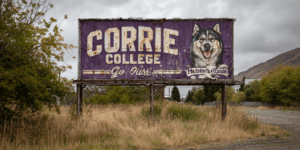
Outdoor advertising can boost local awareness, but for colleges, it’s wiser to invest in digital ad programs.
One-Size-Fits-All PPC
Broad, undifferentiated ad campaigns burn money fast—targeting “any student anywhere” means reaching no one effectively.
Vanity Brand Videos
Overproduced, generic “anthem” videos impress internal stakeholders more than prospective students, who crave authenticity and real stories.
Looking Ahead
The playbook for 2026 is clear: simplify, automate, and humanize. Small colleges that stay nimble—focusing on what converts instead of what’s trendy—will keep their pipelines healthy and sustainable. Marketing can’t fix everything. But smart, focused marketing can give small colleges the clarity, credibility, and consistency they need to thrive.
Need help prioritizing for 2026? Potent can benchmark your marketing maturity and build a tactical roadmap with ROI projections, cost, and ownership recommendations.

About Potent
Potent helps small colleges, schools, and training companies succeed through enrollment optimization, digital marketing, and consulting. As a subsidiary of Partners Marketing Group, we have over 25 years of Higher Ed marketing experience with institutions like Emory University, Kennesaw State University, and the Technical College System of Georgia.
Follow us on LinkedIn or reach out to discuss a plan to help your college meet its potential.